

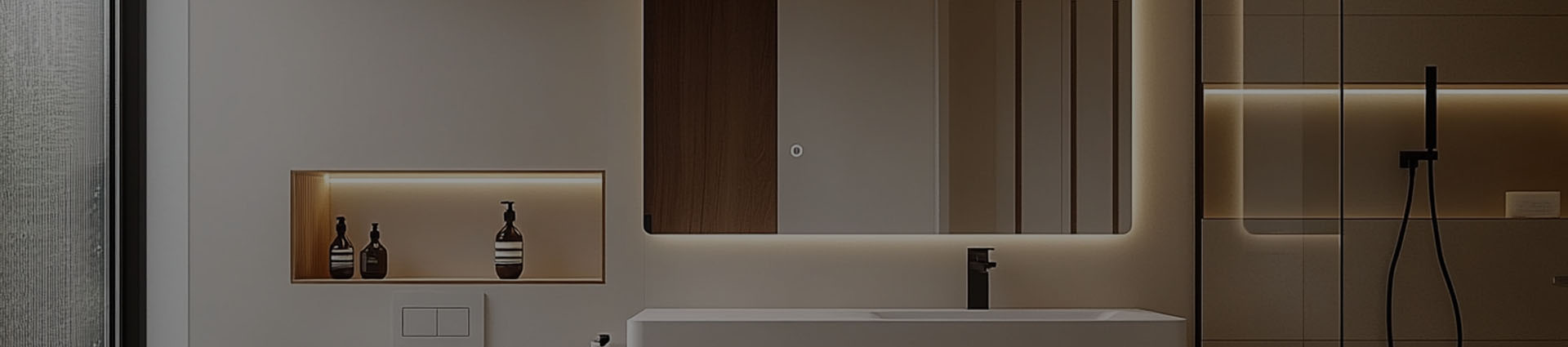
Concealed Shower System vs Surface Mounted Shower System: Which Creates a Cleaner Bathroom Design?
A concealed shower system creates a cleaner bathroom design because valves, pipes, and most connections remain hidden inside the wall. A surface mounted shower system exposes more components but offers easier installation, inspection, and maintenance.
What Is the Main Difference Between Concealed and Surface Mounted Shower Systems?
The main difference is where the functional components are installed.
A concealed shower system places the mixer body, diverter, water connections, and most pipework behind the finished wall. Only the control plate, handles, Shower Head, Hand Shower, and required outlets remain visible.
A surface mounted shower system installs most functional components directly on the wall surface. The mixer, riser rail, shower pipe, diverter, and related hardware remain visible.
Both can provide reliable shower performance, but they create very different visual effects and installation requirements.
Why Does a Concealed Shower System Look Cleaner?
Concealed systems reduce the number of visible mechanical parts.
Instead of seeing exposed pipes, mixer bodies, and multiple connectors, users mainly see:
Control handles or buttons
Shower outlets
Rain shower head
Hand shower connection
Minimal trim plates
This creates larger uninterrupted wall surfaces and makes the bathroom appear less crowded.
The effect is particularly noticeable when the shower system is combined with large-format tiles, stone surfaces, frameless glass, and minimalist bathroom furniture.
For modern bathrooms, the visual benefit comes less from the shower head itself and more from removing unnecessary hardware from sight.
Does a Concealed Shower System Make a Small Bathroom Look Larger?
It can improve the perception of space.
A concealed system does not physically increase the room dimensions, but reducing visible hardware can make a compact shower area feel more open.
This is useful for:
Urban apartments
Compact hotel bathrooms
Small master bathrooms
Modern renovation projects
A surface mounted system projects further from the wall and introduces more visible vertical and horizontal components.
In a large bathroom, this may have little effect. In a narrow shower enclosure, however, the difference can be visually significant.
What Are the Design Advantages of a Surface Mounted Shower System?
Surface mounted systems are not necessarily outdated or unattractive.
Modern surface mounted shower columns can also create a clean appearance when the mixer, riser, shower head, and hand shower are designed as one coordinated product.
Their advantages include:
Visible Product Structure
The complete shower system can become part of the bathroom design rather than disappearing into the wall.
Simpler Installation
Many models can connect directly to prepared hot and cold water outlets.
Easier Replacement
The whole system can often be changed without opening the finished wall.
Suitable for Renovations
Existing plumbing positions can frequently be reused.
For projects where construction simplicity matters more than absolute visual minimalism, a well-designed surface mounted system can offer a strong balance.
Which System Better Matches Modern Minimalist Bathrooms?
A concealed shower system usually matches minimalist interiors better.
Minimalist bathroom design tends to emphasize:
Fewer visible objects
Simple geometric forms
Clear wall surfaces
Integrated fixtures
Consistent finishes
Concealed systems support these principles by hiding the technical structure behind the wall.
Square control plates, slim handles, wall-mounted hand shower outlets, and ceiling or wall-mounted rain showers can create a highly integrated appearance.
For premium modern bathrooms, this often produces a more architectural result than an Exposed Shower Column.
Which System Is Easier to Install?
Surface mounted shower systems are generally easier to install.
A typical surface mounted system requires:
Correct hot and cold water outlet spacing
Wall fixing
Mixer connection
Shower column adjustment
Basic sealing
A concealed shower system requires more coordination before wall finishing.
Installation normally involves:
Positioning the concealed valve body
Confirming installation depth
Routing multiple water outlets
Pressure testing pipe connections
Waterproofing
Tiling
Installing final trim components
This makes concealed systems much more dependent on early project planning.
Why Is Installation Depth Important for Concealed Shower Systems?
Installation depth determines whether the final trim sits correctly against the finished wall.
The concealed valve body must account for:
Wall structure
Waterproofing layer
Tile adhesive
Tile or stone thickness
Final decorative surface
If the valve is installed too deep, handles and trim may not connect correctly.
If it is installed too far forward, the control plate may not sit flush against the wall.
From practical manufacturing and installation experience, this is one of the most important details to confirm before mass installation.
For project orders, dimensional drawings should therefore be provided to contractors before wall construction is completed.
Which System Is Better for Renovation Projects?
Surface mounted systems usually offer greater renovation flexibility.
Replacing an existing exposed Shower Mixer with another surface mounted system may require limited changes to the wall.
This can help reduce:
Tile removal
Plumbing modification
Waterproofing work
Labor time
Construction waste
Concealed systems are easier to install during new construction or major bathroom renovation when the wall is already being opened.
Installing a concealed system purely for visual improvement may not always provide enough value if it requires extensive reconstruction.
Is a Concealed Shower System Harder to Maintain?
It can be, but good product design can reduce the difficulty significantly.
The important distinction is between serviceable parts and permanent pipework.
A properly designed concealed system should allow technicians to access commonly serviced components through the front control opening, including:
Thermostatic cartridge
Mixer cartridge
Diverter
Seals
Control components
Routine servicing should not require removing bathroom tiles.
However, pipe connections inside the wall are less accessible than those on a surface mounted system. This makes installation quality and pressure testing especially important before wall closure.
Why Does Factory Quality Matter More for Concealed Systems?
A hidden installation leaves less room for correcting problems after the bathroom is completed.
Important manufacturing points include:
Valve body machining accuracy
Thread precision
Internal sealing
Cartridge fit
Diverter reliability
Connection dimensions
Pressure resistance
A small leakage issue in a surface mounted system may be easy to detect and repair.
The same issue behind a finished wall can create much greater disruption.
For this reason, concealed valve bodies should receive strict pressure and leakage testing before shipment.
How Should Concealed Shower Systems Be Tested Before Installation?
Testing should cover both the product and the completed plumbing arrangement.
Important checks include:
1. Valve Pressure Testing
The mixer body and internal waterways should be checked for leakage.
2. Thermostatic Function Testing
Thermostatic models should be tested for temperature response and stability.
3. Diverter Testing
Each outlet should switch correctly without unintended cross-flow.
4. Installation Pressure Test
After plumbing connections are completed but before the wall is closed, the system should be pressure tested again.
5. Final Function Check
After trim installation, all outlets and controls should be verified.
This staged approach reduces the risk of discovering a hidden connection problem after tiling.
Which System Is Better for Hotels?
Both can work well, but the hotel category matters.
Concealed systems are commonly suitable for:
Luxury hotels
Resorts
Boutique hotels
Premium suites
They provide cleaner bathroom aesthetics and can support a higher-end room image.
Surface mounted systems can be more practical for:
Business hotels
Large room inventories
Budget hotels
Renovation projects
Hotel operators should also consider maintenance response time.
A visually premium system adds less value if servicing requires excessive labor across hundreds of rooms.
Which System Is More Suitable for Apartment Projects?
For premium apartments, concealed shower systems can improve perceived bathroom quality and support a modern interior concept.
They are especially suitable for:
High-end apartments
New residential developments
Designer homes
Premium master bathrooms
Surface mounted systems may provide better value for:
Standard apartments
Rental housing
Large residential projects
Renovation-focused properties
For developers, the final choice should reflect both the selling position of the property and long-term maintenance requirements.
How Do the Two Systems Compare?
| Factor | Concealed Shower System | Surface Mounted Shower System |
|---|---|---|
| Visual Appearance | Cleaner and more integrated | More visible components |
| Space Perception | Better | More visual hardware |
| Installation | More complex | Simpler |
| Renovation Suitability | Lower unless walls are opened | High |
| Maintenance Access | Requires good service design | Easier |
| Project Planning | Must begin earlier | More flexible |
| Design Positioning | Premium/minimalist | Practical to premium |
| Best Application | New builds, luxury projects | Renovations, standard projects |
The cleaner appearance of a concealed system comes with higher requirements for planning and installation accuracy.
Does Concealed Installation Always Mean Higher Quality?
No.
Concealed installation describes the structure, not the quality level.
A poorly manufactured concealed shower system may create more problems than a well-made surface mounted system.
Buyers should evaluate:
Valve materials
Cartridge quality
Component tolerances
Pressure testing
Spare part availability
Maintenance access
Surface finish consistency
A hidden valve should be selected more carefully precisely because future access is limited.
What Should Project Buyers Confirm Before Ordering Concealed Systems?
Before mass ordering, several technical details should be confirmed:
Required Wall Depth
Ensure the installation cavity can accommodate the valve body.Outlet Configuration
Confirm whether the system uses one, two, or three water outlets.Connection Standards
Threads and plumbing dimensions should match the target market.Service Access
Cartridges and diverters should be replaceable from the front.Flow Requirements
Large rain showers or multiple outlets may require greater water capacity.Installation Drawings
Contractors should receive dimensional information before wall finishing.
For large developments, solving these points before installation can prevent repeated site corrections.
Which System Better Supports OEM Bathroom Collections?
Concealed shower systems provide strong customization possibilities for premium collections.
OEM options may include:
Control plate design
Handle shape
Push-button controls
2 or 3 outlet configurations
Rain shower dimensions
Wall or ceiling mounted shower heads
Surface finishes
Matching hand showers
Surface mounted systems also support OEM customization but often focus more on:
Shower column structure
Mixer appearance
Riser design
Shower head combinations
Finish options
The suitable direction depends on brand positioning and target installation market.
What First-Hand Manufacturing Experience Reveals About Clean Bathroom Design
A clean-looking bathroom is not created only by hiding more components.
The most successful concealed systems combine visual simplicity with technical serviceability.
During product development, reducing the size of a control plate too aggressively can make cartridge maintenance difficult. Adding too many concealed functions can also increase valve complexity and installation risk.
For this reason, good concealed shower design should hide unnecessary hardware without hiding essential maintenance access.
That balance between appearance and serviceability is more important for long-term project value than simply making every component invisible.
Which Shower System Creates a Cleaner Bathroom Design?
A concealed shower system creates the cleaner and more minimalist bathroom appearance because valves, connections, and pipework are hidden behind the wall.
A surface mounted shower system provides greater installation and maintenance convenience, making it a practical choice for renovation projects and bathrooms where easy servicing matters more than complete visual integration.
For project buyers, concealed installation is most valuable when it is planned during construction, supported by reliable valve quality, and designed with future maintenance access in mind.
TOPSHINE supports OEM and ODM concealed and surface mounted shower system development, including thermostatic controls, outlet configurations, shower head designs, surface finishes, and project-specific installation solutions.